
Claim Your Free Estimate Today

Table of Contents
- Why Your Gas Water Heater Pilot Light Goes Out
- How to Clean a Pilot Light Orifice
- Gas Water Heater Pilot Light Won’t Stay Lit: Testing and Diagnosis
- Thermocouple Replacement Cost and When to Replace
- How to Safely Relight Your Pilot Light
- Common Mistakes to Avoid
- When to Call a Professional
- Frequently Asked Questions
Last Updated: October 2, 2026
Why Your Gas Water Heater Pilot Light Goes Out
A pilot light that won’t stay lit is one of the most common gas water heater problems homeowners face. The pilot light is a small flame that ignites the main burner when hot water is needed. When it goes out repeatedly, your water heater stops working until you relight it manually. Most pilot light issues come down to three main culprits: thermocouple failure, a dirty pilot orifice, or gas supply problems.
Understanding why your pilot light keeps going out helps you decide whether this is a quick fix or a job for a professional. Some issues you can handle yourself. Others require specialized tools and expertise.
Thermocouple failure
The thermocouple is a safety device that detects whether the pilot light is burning. It’s a thin metal rod positioned directly in the pilot flame. When the flame heats the thermocouple, it generates a small electrical signal that tells the gas valve to stay open.
A failing thermocouple is the leading cause of pilot light problems. You’ll notice the pilot light lights easily but won’t stay lit for more than a few seconds after you release the ignition button.
Pro Tip
If your pilot light ignites but dies immediately when you release the button, the thermocouple is almost certainly the problem. This is one of the most common pilot light troubleshooting scenarios.
If your pilot light ignites but dies immediately when you release the button, the thermocouple is almost certainly the problem. This is one of the most common pilot light troubleshooting scenarios.
Dirty pilot orifice
The pilot orifice is a tiny opening where gas flows to create the pilot flame. Over time, sediment, rust, and mineral deposits can clog this opening. When the orifice gets blocked, the pilot flame becomes weak or won’t ignite at all.
A weak pilot flame may light initially but won’t generate enough heat to properly activate the thermocouple. The thermocouple then signals the gas valve to close, and your pilot light goes out.
Gas supply issues
Sometimes the problem isn’t the pilot light itself but the gas reaching it. Check whether your gas valve is fully open. The valve handle should be parallel to the gas line.
Low gas pressure can also prevent the pilot light from staying lit. This may happen if your gas meter has issues or if there’s a problem with the main gas supply to your home.
Watch Out
Never attempt to adjust your gas meter or main gas line yourself. Gas leaks are dangerous. If you smell gas or suspect a supply problem, leave the area and call your gas company or a licensed plumber right away.
Never attempt to adjust your gas meter or main gas line yourself. Gas leaks are dangerous. If you smell gas or suspect a supply problem, leave the area and call your gas company or a licensed plumber right away.
How to Clean a Pilot Light Orifice
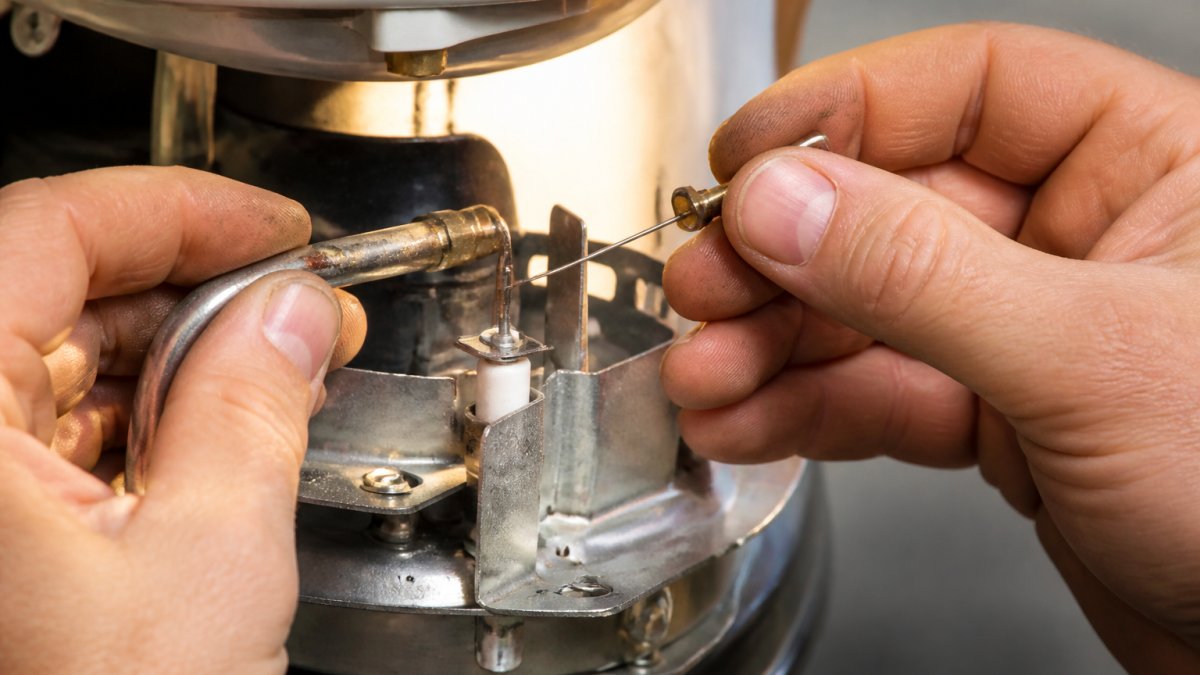
Cleaning the pilot orifice is one of the few pilot light troubleshooting tasks you can do safely at home. This process takes about 15 to 20 minutes and requires minimal tools.
What you’ll need
- Adjustable wrench or socket set
- Small needle or thin wire (a sewing needle works)
- Soft brush or old toothbrush
- Flashlight or headlamp
- Small container to hold screws and parts
- Dry cloth or paper towels
Step-by-step cleaning process
Step 1: Turn off the gas supply
Locate the gas shutoff valve on your water heater.
Step 2: Access the pilot light assembly
Most water heaters have a removable access panel covering the pilot light.
Step 3: Locate the pilot orifice
Look for a small brass fitting with a tiny hole.
Step 4: Remove the pilot tube assembly
Step 5: Clean the orifice opening
Step 6: Reassemble the pilot tube
Carefully reconnect the pilot tube to the gas valve.
Step 7: Reattach the access panel
Position the access panel back in place.
Step 8: Turn the gas back on
Locate the gas shutoff valve again and turn it counterclockwise until it stops.
Key Takeaway
If cleaning the orifice doesn’t solve your problem, the issue is likely the thermocouple or a gas supply problem. Both require professional diagnosis and repair.
If cleaning the orifice doesn’t solve your problem, the issue is likely the thermocouple or a gas supply problem. Both require professional diagnosis and repair.
Gas Water Heater Pilot Light Won’t Stay Lit: Testing and Diagnosis
When your pilot light won’t stay lit after cleaning, testing the thermocouple is the next step. A simple visual inspection can rule out obvious problems before you move to more detailed testing.
Visual inspection checklist
Before you test anything, check these items:
- Is the pilot flame blue and steady? (A yellow or flickering flame suggests a problem)
- Is the thermocouple positioned directly in the pilot flame? (It should be in the center of the flame)
- Are there any visible cracks or corrosion on the thermocouple? (Look for white or green discoloration)
- Is the pilot tube connection tight at the gas valve? (Gently try to wiggle it)
- Does your home have adequate gas pressure? (Contact your gas provider if you’re unsure)
If the thermocouple looks corroded or is positioned away from the flame, repositioning or replacing it may solve the problem. If everything looks normal, move to testing.
How to test your thermocouple
Testing a thermocouple requires a multimeter, a tool that measures electrical voltage. This is where pilot light troubleshooting becomes more technical.
Set your multimeter to the millivolt (mV) setting. With the pilot light burning, touch one probe to the thermocouple terminal and the other to ground (the metal body of the water heater). A healthy thermocouple should read between 20 and 30 millivolts.
If your reading is below 20 millivolts or shows no reading at all, the thermocouple has failed and needs replacement. If the reading is normal but the pilot still won’t stay lit, the problem may be with the gas valve itself, which requires professional repair.
Pro Tip
If you don’t own a multimeter, a professional plumber can test your thermocouple in minutes. The cost of a service call is often less than buying tools you’ll only use once.
If you don’t own a multimeter, a professional plumber can test your thermocouple in minutes. The cost of a service call is often less than buying tools you’ll only use once.
Thermocouple Replacement Cost and When to Replace
A thermocouple replacement is a common water heater repair. If you’re handy, you can replace it yourself and save on labor costs.
Claim Your Free Estimate Today →
However, thermocouple replacement becomes necessary when testing confirms the part has failed.
When deciding between DIY replacement and calling a professional, consider your comfort level working with gas appliances.
If your water heater is over 10 years old and the thermocouple fails, it’s worth asking whether the entire unit should be replaced.
How to Safely Relight Your Pilot Light
Once you’ve completed any repairs or cleaning, relighting the pilot is straightforward. Always follow your water heater’s specific instructions, as procedures vary by model.
Safety precautions before you start
- Ensure the area around your water heater is well-ventilated
- Never relight the pilot if you smell gas, leave immediately and call your gas company
- Keep children and pets away from the water heater during this process
- Have a flashlight ready so you can see the pilot light clearly
- Make sure the gas shutoff valve is fully open before you start
Relighting steps
Step 1: Locate the control knob
Find the temperature control knob on your water heater.
Step 2: Set the knob to pilot
Turn the control knob to the “Pilot” position.
Step 3: Press and hold the ignition button
Step 4: Look for the flame
Watch the viewing window for the pilot flame. It should be blue and steady.
Step 5: Release the button and listen
Release the ignition button. If the pilot flame stays lit, you’ve succeeded.
Step 6: Turn the knob to the desired temperature
Once the pilot stays lit, turn the control knob from “Pilot” to your desired water temperature setting.
Watch Out
If the pilot light won’t stay lit after multiple attempts, stop trying to relight it. Repeated ignition attempts can flood the combustion chamber with gas, creating a safety hazard. Call a professional instead.
If the pilot light won’t stay lit after multiple attempts, stop trying to relight it. Repeated ignition attempts can flood the combustion chamber with gas, creating a safety hazard. Call a professional instead.
Common Mistakes to Avoid
Many homeowners make the same pilot light troubleshooting errors. Knowing what to avoid saves time and prevents damage.
Forcing the pilot tube connection. The nuts and fittings are delicate.
Cleaning the orifice too aggressively. A small needle is sufficient.
Ignoring a yellow or orange pilot flame. A blue flame means clean combustion.
Attempting thermocouple replacement without turning off the gas. Always shut off the gas supply first.
When to Call a Professional
Some pilot light troubleshooting is within reach for homeowners. Other problems require professional equipment and expertise. Know when to stop and call for help.
Call a professional if:
- The pilot light won’t stay lit after you’ve cleaned the orifice
- Your multimeter test shows the thermocouple has failed
- You smell gas at any point during your troubleshooting
- The pilot tube or gas valve connections are leaking
- The water heater is over 15 years old and the pilot keeps failing
- You’re uncomfortable working with gas appliances at any stage
Acclaimed Drain And Plumbing Solutions, LLC provides professional water heater repair and diagnostics.
A professional diagnosis takes the guesswork out of pilot light troubleshooting. We utilize professional diagnostic equipment, testing, sewer cameras, and photo and video documentation when appropriate.
A gas water heater pilot light that won’t stay lit is frustrating, but most causes are fixable. Start with the simplest solution: cleaning the pilot orifice. If that doesn’t work, test the thermocouple or check your gas supply. When you’ve narrowed down the problem and the fix is beyond your comfort level, Acclaimed Drain And Plumbing Solutions, LLC is ready to help. We diagnose the exact issue, explain your options clearly, and restore your hot water quickly. Claim Your Free Estimate Today and get back to reliable hot water today.
Frequently Asked Questions
Why does my gas water heater pilot light keep going out?
The most common cause is a failing thermocouple, which senses heat from the pilot flame and signals the gas valve to stay open. When the thermocouple weakens, it stops sending the signal, and the gas valve closes, extinguishing the pilot light. Dirt and sediment blocking the pilot orifice, drafts near the water heater, or a faulty gas regulator can also cause repeated outages. If your pilot light won’t stay lit after relighting, have the thermocouple tested or replaced.
Is it safe to relight a gas water heater pilot light myself?
Yes, relighting a pilot light is generally safe if you follow the manufacturer’s instructions and basic precautions. Turn off the gas supply for 5 minutes before attempting to relight, ensure the area is well-ventilated, and use only the ignition method specified in your manual (usually a piezo igniter or long match). Never use a lighter or regular match. If you smell gas, stop immediately and call a professional. If the pilot light won’t stay lit after multiple attempts, do not continue trying, call a licensed plumber.
How long should I hold the pilot button down when lighting my water heater?
Most gas water heaters require you to hold the pilot button down for 20 to 30 seconds after ignition. This allows the thermocouple to heat up and generate the electrical signal needed to keep the gas valve open. Once you release the button, the pilot flame should remain steady. If the flame goes out immediately after releasing the button, the thermocouple may be failing and needs replacement. Check your water heater’s manual for the exact hold time, as it varies by model.
What is a thermocouple and why does it affect my pilot light?
A thermocouple is a small metal probe that sits in the pilot flame and generates a tiny electrical current when heated. This current tells the gas control valve to keep the gas flowing to the pilot. If the thermocouple is corroded, damaged, or misaligned, it won’t generate enough current, and the valve closes, shutting off the pilot light. A failing thermocouple is the leading cause of pilot light problems and typically requires professional replacement to ensure proper function and safety.
